Abdul El-Sayed and ISNA: The Connections Raising Questions About Radical Islamist Influence
September 1, 2026
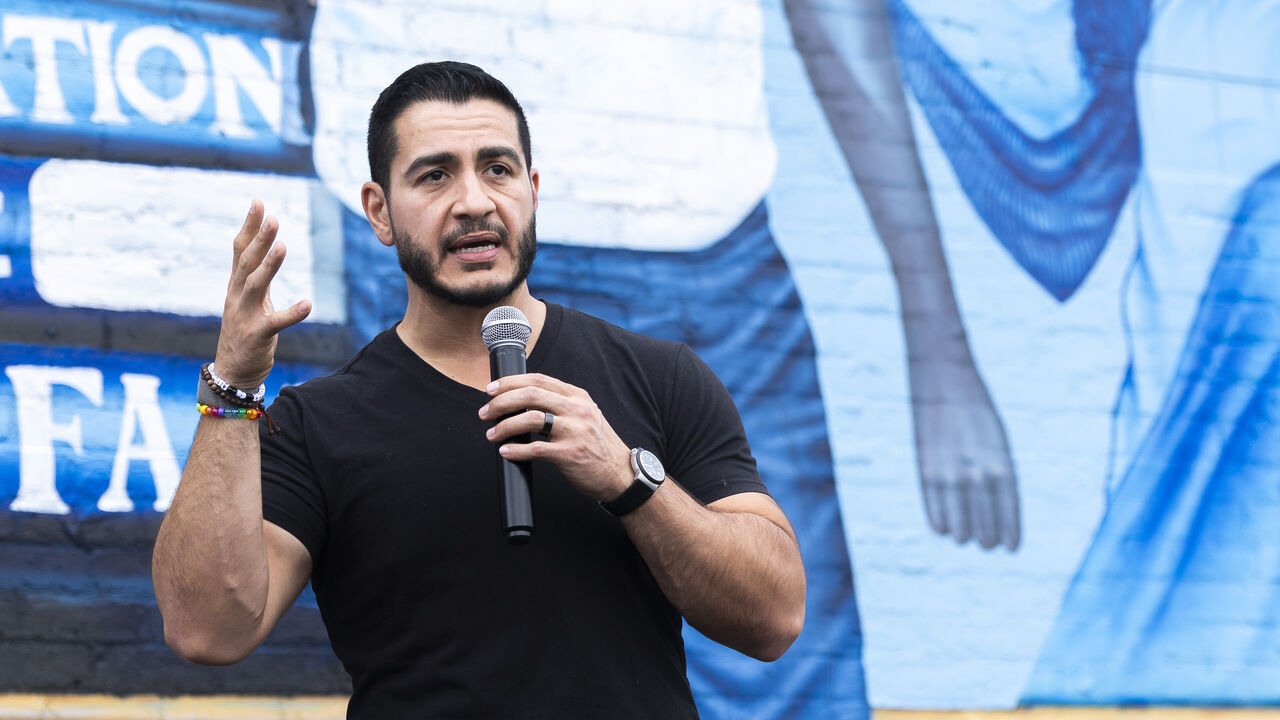
Abdul El-Sayed is scheduled to appear at the Islamic Society of North America’s 2026 annual convention in Detroit, putting renewed attention on his connections to ISNA and raising broader questions about political access, organizational networks, and radical Islamist influence in American institutions.
ISNA’s official convention website currently lists El-Sayed among its invited and confirmed speakers for the September 4–7 gathering.
That fact alone does not establish that El-Sayed shares the beliefs, associations, or statements of ISNA or anyone else appearing at the convention.
But the story does not end with a speaking engagement.
Recent reporting has also focused on El-Sayed’s father-in-law, Tayeb Jukaku, his reported financial support for a pro-El-Sayed super PAC, and ISNA’s history of scrutiny stemming from the federal Holy Land Foundation terrorism-financing case.
Americans deserve to know the documented facts.
Here are the connections raising questions.
1. Abdul El-Sayed Is Scheduled to Appear at the 2026 ISNA Convention
The Islamic Society of North America says its 63rd annual convention will take place September 4–7, 2026, in Detroit.
ISNA describes the gathering as one of America’s largest annual Muslim gatherings, bringing together community members, religious leaders, scholars, businesses, nonprofits, and other participants.
Its official speaker list includes Abdul El-Sayed.
The appearance is significant because El-Sayed is not merely a private citizen. He is seeking political power, making transparency surrounding the organizations and political networks with which he interacts a legitimate matter of public interest.
Again, appearing at a convention does not establish agreement with every speaker or organization involved.
It does, however, make understanding the organization and its history relevant.
2. El-Sayed’s Father-in-Law Has Reportedly Given $300,000 to a Super PAC Supporting Him
The connections go beyond a convention appearance.
Recent reporting based on federal campaign-finance records says Tayeb Jukaku, El-Sayed’s father-in-law, contributed a combined $300,000 to Fighting for Michigan PAC, a super PAC supporting El-Sayed.
The reported contributions consisted of three $100,000 donations and made Jukaku the PAC’s largest individual donor as of that reporting.
That is a significant financial connection to El-Sayed’s political operation.
3. Jukaku Has Been Identified With ISNA’s Founders Committee
Jukaku has also been reported as serving on ISNA’s Founders Committee.
Put those facts together:
El-Sayed is scheduled to appear at ISNA’s convention.
His father-in-law has been associated with ISNA leadership through its Founders Committee.
And that same family member has reportedly contributed $300,000 to a super PAC supporting El-Sayed.
None of those facts, individually or collectively, proves support for radical Islamism.
They do establish documented organizational, familial, and financial relationships worthy of public scrutiny.
4. Why Does the Holy Land Foundation Case Matter?
Understanding the controversy surrounding ISNA requires understanding the Holy Land Foundation case.
The Holy Land Foundation for Relief and Development was at the center of a major federal terrorism-financing prosecution involving support for Hamas.
Federal prosecutors included hundreds of individuals and entities on a list of unindicted co-conspirators and/or joint venturers connected to the case. ISNA was among the organizations identified.
This distinction matters: being identified as an unindicted co-conspirator is not the same thing as being charged with or convicted of a crime.
The underlying litigation nevertheless produced an extensive public record concerning organizations, individuals, financial relationships, Hamas, and the Muslim Brotherhood.
That history is one reason ISNA's relationships continue to attract scrutiny.
5. This Is Bigger Than Abdul El-Sayed
El-Sayed may be the latest headline, but Americans should not view this solely as a story about one politician.
The larger question is how ideological movements and organizations build influence.
Influence can develop through relationships, funding, conferences, advocacy organizations, political access, community institutions, and the credibility that comes from participation in mainstream American civic life.
None of those activities automatically demonstrates extremism.
That is precisely why transparency matters.
The objective should not be guilt by association. It should be understanding documented relationships and determining where legitimate civic participation ends and extremist influence begins.
6. Americans Should Know Who Is Gaining Institutional Influence
American institutions hold enormous power.
They shape our laws.
They educate our children.
They influence public policy.
They affect immigration, law enforcement, foreign policy, and national security.
Americans therefore have every right to scrutinize organizations and ideological networks seeking influence within them, particularly when documented histories raise legitimate national-security questions.
Religious freedom must remain protected.
So must America's institutions.
Those principles are not contradictory.
Americans can defend the right of Muslims to practice their faith while simultaneously opposing radical Islamist ideology and demanding transparency about extremist-linked networks seeking political influence.
What Is the Difference Between Islam and Radical Islamism?
Islam is a religion practiced by Muslims around the world.
Radical Islamism refers to extremist political or ideological movements that seek to impose radical interpretations of Islamic governance or advance extremist objectives.
Criticism of radical Islamist ideology should not be treated as criticism of Muslims simply for practicing their religion.
The distinction matters.
America can protect religious liberty while remaining vigilant against extremist political movements.
What Should Americans Demand?
Transparency.
Accountability.
Scrutiny of political funding and organizational relationships.
And vigilance when individuals or organizations with documented extremist-linked histories seek political legitimacy or institutional influence.
The public should be able to examine the evidence and reach its own conclusions.
Abdul El-Sayed's scheduled ISNA appearance is one reason these questions are back in the spotlight.
It should not be the last time Americans ask them.
Keep Radical Islam Out of America's Institutions
America's institutions belong to the American people.
We should know who is attempting to influence them, where political money comes from, which organizations are providing access and legitimacy, and what documented relationships exist behind the scenes.
The warning signs should be investigated, not ignored.
Know the connections. Demand accountability.
SIGN THE PETITION: KEEP RADICAL ISLAM OUT OF AMERICA'S INSTITUTIONS
.avif)