The Real Abdul El-Sayed Record: Why Radical Associations Matter More Than Punditry
September 22, 2026
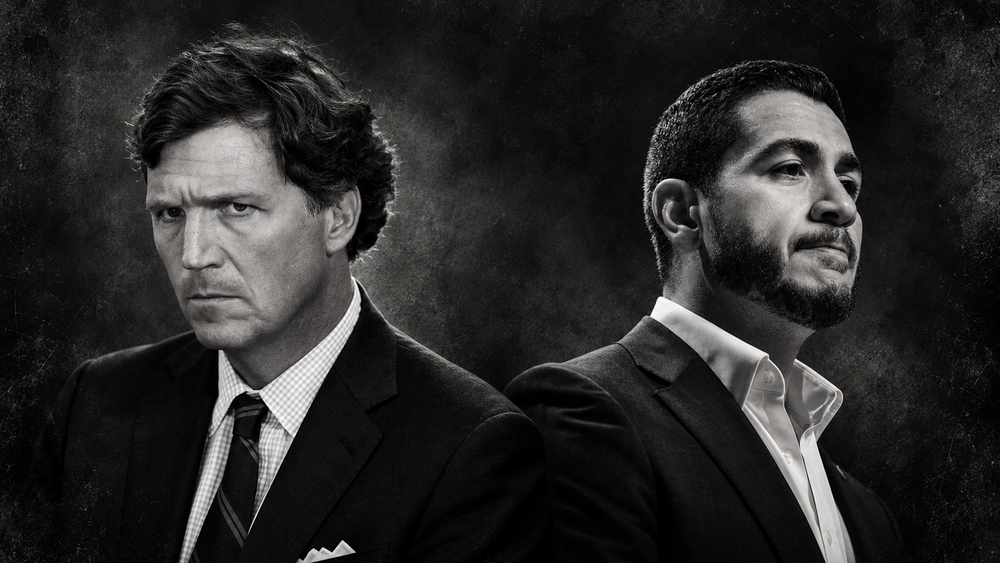
Tucker Carlson recently sent shockwaves through the political landscape by offering a stunning defense of Michigan’s progressive Democratic Senate nominee, Abdul El-Sayed.
Carlson went so far as to call El-Sayed’s agenda “literally Trumpian,” declared he wouldn’t vote for Republican Mike Rogers “at gunpoint,” and even ran interference for El-Sayed’s highly controversial past comments regarding America’s response to 9/11.
But while media pundits chase clicks and contrarian headlines, we must remain focused on the facts.
When you strip away the television spin and examine Abdul El-Sayed’s documented record, a deeply concerning picture emerges. It is a record characterized by proximity to radical networks and organizations that have historically sought to infiltrate and influence American institutions.
The University of Michigan Muslim Students Association (MSA)
Abdul El-Sayed’s political foundation was built during his time as a student leader.
As an undergraduate, he served as the Vice President of the University of Michigan’s Muslim Students Association (MSA).
This is not simply a collegiate social club. The national MSA was notoriously founded in the 1960s by members of the Muslim Brotherhood.
Under El-Sayed’s leadership in 2007, the UM chapter made headlines when he helped lead a protest and student walkout against a panel of self-described "ex-terrorists" who had abandoned Islamic extremism and converted to Christianity.
Championing protests against individuals who explicitly denounced radical Islamist violence raises serious questions about the ideological environment El-Sayed helped foster during his tenure.
Alleged Muslim Brotherhood-Connected Networks
The scrutiny extends far beyond college protests.
For years, organizations and individuals within El-Sayed’s orbit have faced allegations concerning links to Muslim Brotherhood-connected networks.
It is a matter of public record that El-Sayed's familial and political networks intersect with prominent domestic Islamic organizations, such as the Islamic Society of North America (ISNA) and the Council on American-Islamic Relations (CAIR), groups that have historically faced intense federal scrutiny over their origins and alleged ties to the broader Muslim Brotherhood network in America.
The Muslim Brotherhood’s own documented explanatory memorandums have historically described their work in America as a "civilization-jihadist process" aimed at influencing institutions from within.
When a candidate seeking one of the highest offices in the land has a record of leadership and association with organizations linked to this network, Americans have a duty to ask hard questions.
The Domestic Institutional Threat
This is not a debate about foreign policy or the Middle East. This is entirely about the integrity of America’s domestic institutions.
When political figures like Tucker Carlson offer unearned praise to candidates like El-Sayed, they legitimize the very networks that conservative and security-minded Americans have spent decades trying to expose.
We cannot afford to have a blind spot when it comes to the ideological company a candidate keeps. The people, networks, and organizations that elevate a politician ultimately guide their hand once they achieve power.
The Bottom Line
America’s institutions should have no foothold for radical Islamist influence.
Follow the connections. Know who is seeking power.
FAQ:
What did Tucker Carlson say about Abdul El-Sayed?
Tucker Carlson praised Michigan candidate Abdul El-Sayed, describing his agenda as "literally Trumpian," declaring he would not vote for Republican Mike Rogers "at gunpoint," and defending El-Sayed’s past controversial comments about America's response to 9/11.
What was Abdul El-Sayed’s leadership role in the Muslim Students Association (MSA)?
El-Sayed served as Vice President of the University of Michigan Muslim Students Association.
In 2007, under his leadership, the chapter led protests and student walkouts against speakers who had publicly denounced Islamic extremism.
What is the historical connection between the MSA and the Muslim Brotherhood?
The National Muslim Students Association was established in the 1960s by members of the Muslim Brotherhood to build ideological presence and influence across American college campuses.
Which organizations in El-Sayed's political network have faced federal scrutiny?
El-Sayed’s campaign and professional networks overlap with organizations such as the Council on American-Islamic Relations (CAIR) and the Islamic Society of North America (ISNA), both of which have faced historical scrutiny regarding ties to Muslim Brotherhood networks.
How does SAN distinguish between Islam and radical Islamist ideology?
Islam is a religious faith protected under the First Amendment.
Radical Islamist ideology is a political movement that uses religious framework to subvert democratic institutions from within.
Does this critique focus on foreign policy or Middle East conflicts?
No. This analysis strictly addresses domestic institutional integrity, civic security, and preventing radical ideological networks from acquiring political power inside American institutions.