7 Security Questions Abdul El-Sayed Must Answer
August 20, 2026
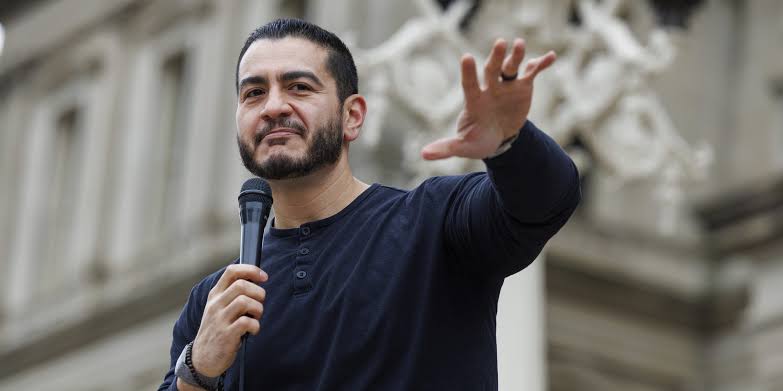
Abdul El-Sayed has won Michigan’s Democratic nomination for the United States Senate and will face Republican Mike Rogers in November, according to the Associated Press.
That victory makes El-Sayed’s record more important than ever.
His documented positions include abolishing ICE, reducing police funding, and questioning whether America needs as much police or armed police. He has also campaigned with controversial streamer Hasan Piker, while financial records raise questions about his relationships with CAIR and the family money supporting a pro-El-Sayed super PAC.
These records do not prove criminal wrongdoing. They do create legitimate questions about public safety, national security, financial transparency, and political judgment.
Quick Answer: What Are the Main Concerns About Abdul El-Sayed?
The seven questions involve:
- His commitment to abolishing ICE.
- His previous support for defunding police.
- His statements questioning armed police and police staffing.
- His decision to campaign with Hasan Piker.
- The $200,000 his father-in-law gave to a pro-El-Sayed super PAC.
- His father-in-law’s documented leadership roles with CAIR-Michigan and ISNA.
- El-Sayed’s own paid speaking relationship with CAIR-Oklahoma.
This is not about El-Sayed’s religion or ethnicity. It is about the policies he supports, the alliances he chooses, and the financial relationships surrounding a candidate seeking national power.
1. If El-Sayed Abolishes ICE, Who Will Enforce Immigration Law?
El-Sayed is not hiding his position on Immigration and Customs Enforcement.
In July 2026, his campaign released an advertisement titled “Abolish ICE.” El-Sayed states:
“I’m Abdul El-Sayed, the only Senate candidate for abolishing ICE, and I approve this message.”
ICE performs immigration-enforcement duties inside the United States. Its responsibilities include arresting certain removable noncitizens, investigating cross-border criminal activity, detaining individuals subject to removal, and executing final removal orders.
El-Sayed argues that immigration enforcement should be rebuilt and that other agencies can secure the border. But abolishing ICE still leaves a fundamental question unanswered:
Which agency would assume ICE’s interior-enforcement responsibilities, and would it have sufficient officers, detention capacity, funding, and legal authority?
Calling for an agency to be abolished is easy. Explaining how federal law will be enforced afterward is the real test.
2. What Police Funding Would El-Sayed Cut?
El-Sayed has attempted to distance himself from the phrase “defund the police,” but his recorded statements from 2020 are clear.
During a Detroit Public Radio interview, El-Sayed said:
“I believe that we do need to defund the police in so far as defunding the police is disinvesting in the means of incarcerating someone or killing them on the streets.”
He also said the policy would mean investing less money in police and more in schools, libraries, mental-health programs, and social services.
The original interview and broader context are available from WDET. A CNN review of El-Sayed’s statements documented his use of the phrase and his support for reducing police spending.
His campaign now says his position has become more nuanced. It says he supports improved recruitment, retention, and retirement funding while opposing militarized policing and supporting behavioral-health intervention.
That updated position should be included in any fair assessment. But it does not erase the need for specific answers.
What police programs would El-Sayed cut? What funding would he preserve? What resources would he provide for violent-crime investigations, emergency response, officer safety, and recruitment?
3. Does El-Sayed Believe Police Officers Need Guns?
In a University of Michigan presentation about systemic racism and public spending, El-Sayed asked:
“Do police really need to use guns? Do we need as much of a police force?”
The full video and transcript are published by the University of Michigan.
El-Sayed made the statement while discussing military equipment, police budgets, poverty, public health, and racial disparities. That context belongs in the record.
So does the practical reality that police officers regularly confront armed criminals, active shooters, violent domestic disputes, terrorist threats, and dangerous fugitives.
Police accountability and strong policing are not opposites. America can improve training, transparency, community trust, and disciplined use-of-force standards without leaving officers unable to confront violent threats.
El-Sayed should explain where he now draws that line.
4. Why Does El-Sayed Associate With Hasan Piker?
El-Sayed held two Michigan campaign events with political streamer Hasan Piker in April 2026.
The Associated Press reported that criticism centered on several inflammatory Piker statements, including:
- “America deserved 9/11.”
- “Hamas is a thousand times better” than Israel.
- A description of some Orthodox Jews as “inbred.”
Piker told the Associated Press that some remarks were poorly worded. Regarding September 11, he said he did not mean that Americans deserved to die.
El-Sayed said he does not agree with everything Piker has said. He defended the events as an effort to reach Piker’s audience and argued that the Democratic Party should move beyond cancel culture.
Piker has the right to speak. El-Sayed has the right to campaign with him. Americans also have the right to judge that decision.
A senator’s choice of political partners can reveal how that senator evaluates extremism, inflammatory rhetoric, and national-security questions.
5. Who Is Financing the Super PAC Supporting El-Sayed?
El-Sayed campaigns against the influence of outside money in politics. At the same time, a super PAC supporting his candidacy has received major financial support from his family.
El-Sayed’s father-in-law, Jukaku Tayeb, contributed $200,000 to Fighting for Michigan PAC.
PolitiFact verified the contribution and reported that Tayeb was the super PAC’s second-largest donor through the end of March.
The PAC says Tayeb does not control its strategy, operations, or spending. PolitiFact found no evidence establishing that he runs the organization.
That distinction matters. A large donation does not automatically establish control or illegal coordination.
However, when a relative provides a substantial share of the money raised by an outside group supporting a candidate, voters are justified in asking:
- What contact has the campaign had with the donor?
- What procedures prevent illegal coordination?
- What influence does the donor have over the broader political operation?
- Will El-Sayed disclose any conversations concerning the super PAC?
Transparency is especially important for a candidate who makes outside political spending a central campaign issue.
6. What Is the Documented History of El-Sayed’s Father-in-Law?
The relative involved in the documented CAIR and ISNA relationships is El-Sayed’s father-in-law, Jukaku Tayeb. It is not El-Sayed’s biological father.
Public records show that Tayeb served as president of CAIR-Michigan from 2005 through 2010. CAIR-Michigan’s current leadership page continues to list him as a member of its board of directors.
A Washington Free Beacon investigation based on organizational publications and tax filings also reported that Tayeb has served on the Islamic Society of North America’s founders committee since at least 2007.
CAIR and ISNA were named as unindicted co-conspirators by federal prosecutors during the Holy Land Foundation terrorism-financing case. Prosecutors described the organizations in filings concerning the Muslim Brotherhood’s historical network in the United States.
CAIR and ISNA disputed those descriptions. The reviewed records do not show that El-Sayed or Tayeb was charged with a crime related to the case.
This is that a candidate receiving substantial political support from a relative with this organizational history should answer questions openly and directly.
Does El-Sayed reject political Islamism? What does he believe about the historical court record involving CAIR and ISNA? What influence, if any, does Tayeb have over his agenda?
Americans deserve clear answers.
7. What Is El-Sayed’s Direct Relationship With CAIR?
The CAIR relationship is not limited to El-Sayed’s father-in-law.
El-Sayed’s United States Senate financial disclosure lists CAIR-Oklahoma as the source of a speaking engagement. The organization appears in the section identifying entities that paid more than $5,000 to El-Sayed or for services he provided.
The disclosure can be reviewed here.
A paid speaking engagement does not prove that a speaker agrees with every position taken by the sponsoring organization. It does establish a direct financial and professional relationship that deserves disclosure and explanation.
El-Sayed should answer:
- When did the engagement occur?
- How much did he receive?
- What was the subject of his speech?
- Which CAIR officials invited or paid him?
- Does he agree with CAIR’s positions on law enforcement, Israel, Hamas, and political Islamism?
- Would he accept another paid engagement from the organization?
These are specific questions based on a disclosure El-Sayed filed himself.
What Should El-Sayed Commit to Before the Election?
El-Sayed should provide Michigan voters with five clear commitments:
- Explain which agency would enforce immigration law if ICE were abolished.
- Identify every law-enforcement program he would cut, preserve, or expand.
- Affirm that police must remain prepared to confront armed and violent threats.
- Disclose the details of his CAIR-Oklahoma speaking engagement.
- Explain the influence of major family donors and reject any political movement seeking to weaken constitutional law.